SCE Hosts 13th Faculty-Student Research Convention to Promote Educational Innovation and Research
Samtse College of Education Hosts 13th Faculty–Student Research Convention to Promote Educational Innovation and Research
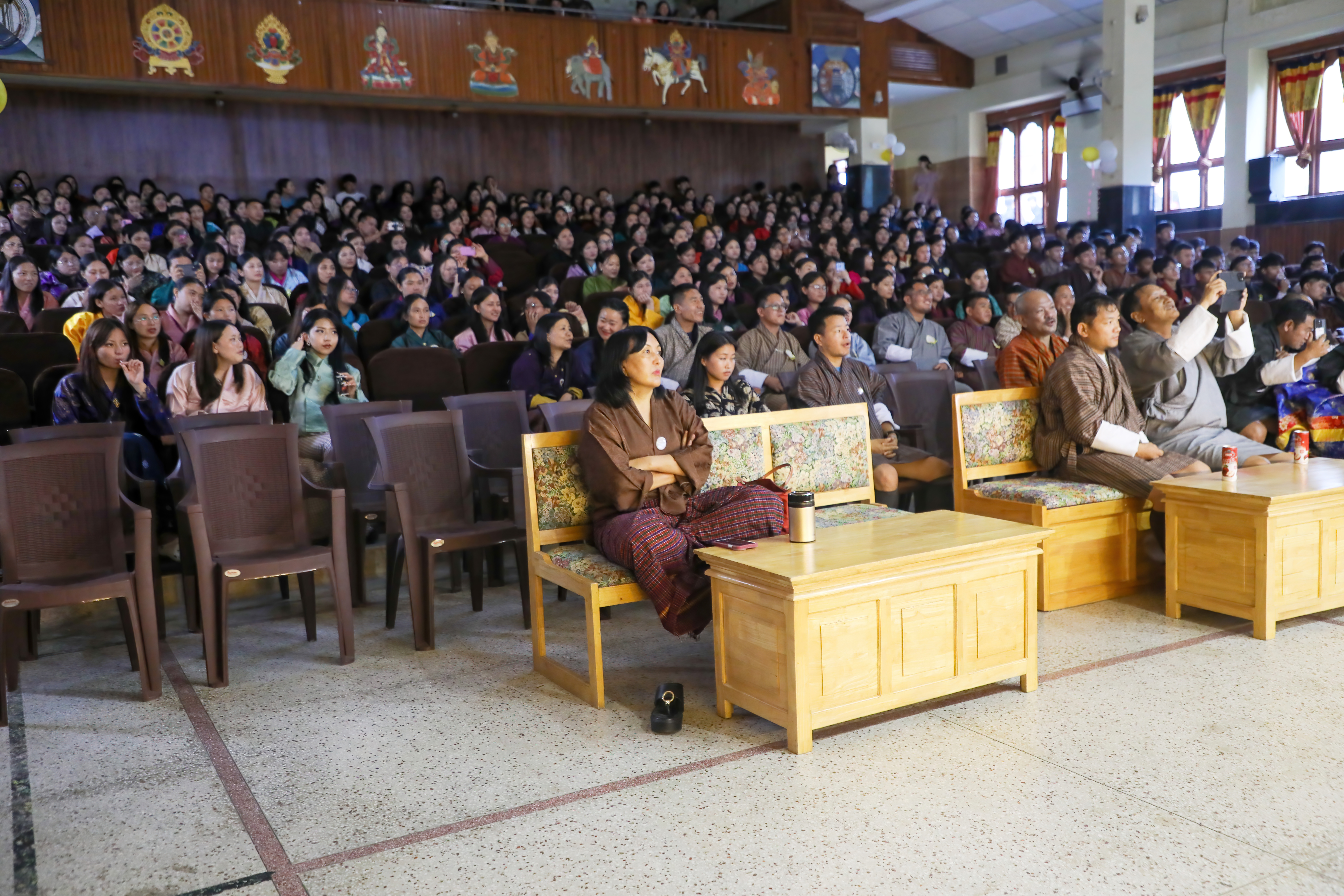
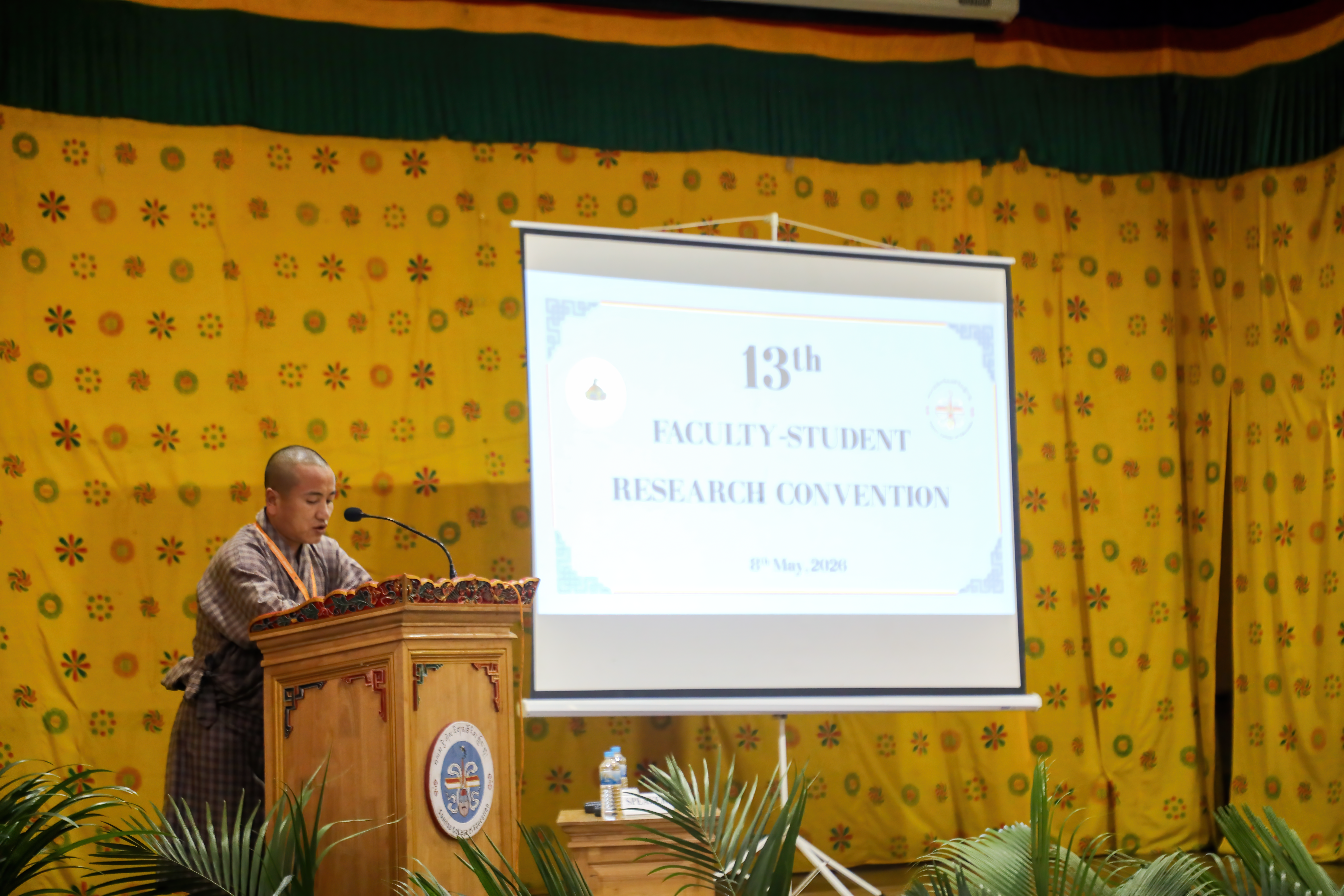
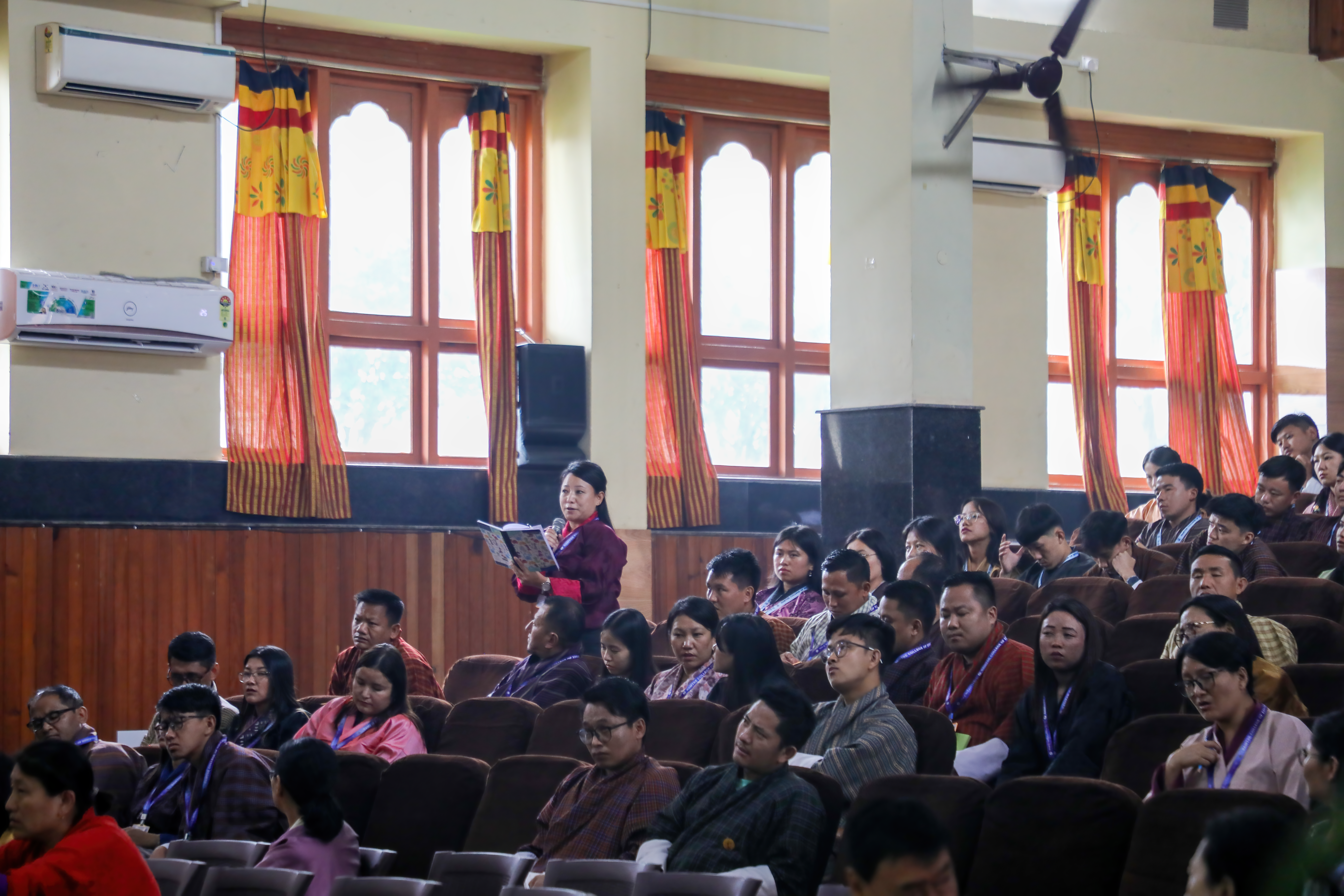
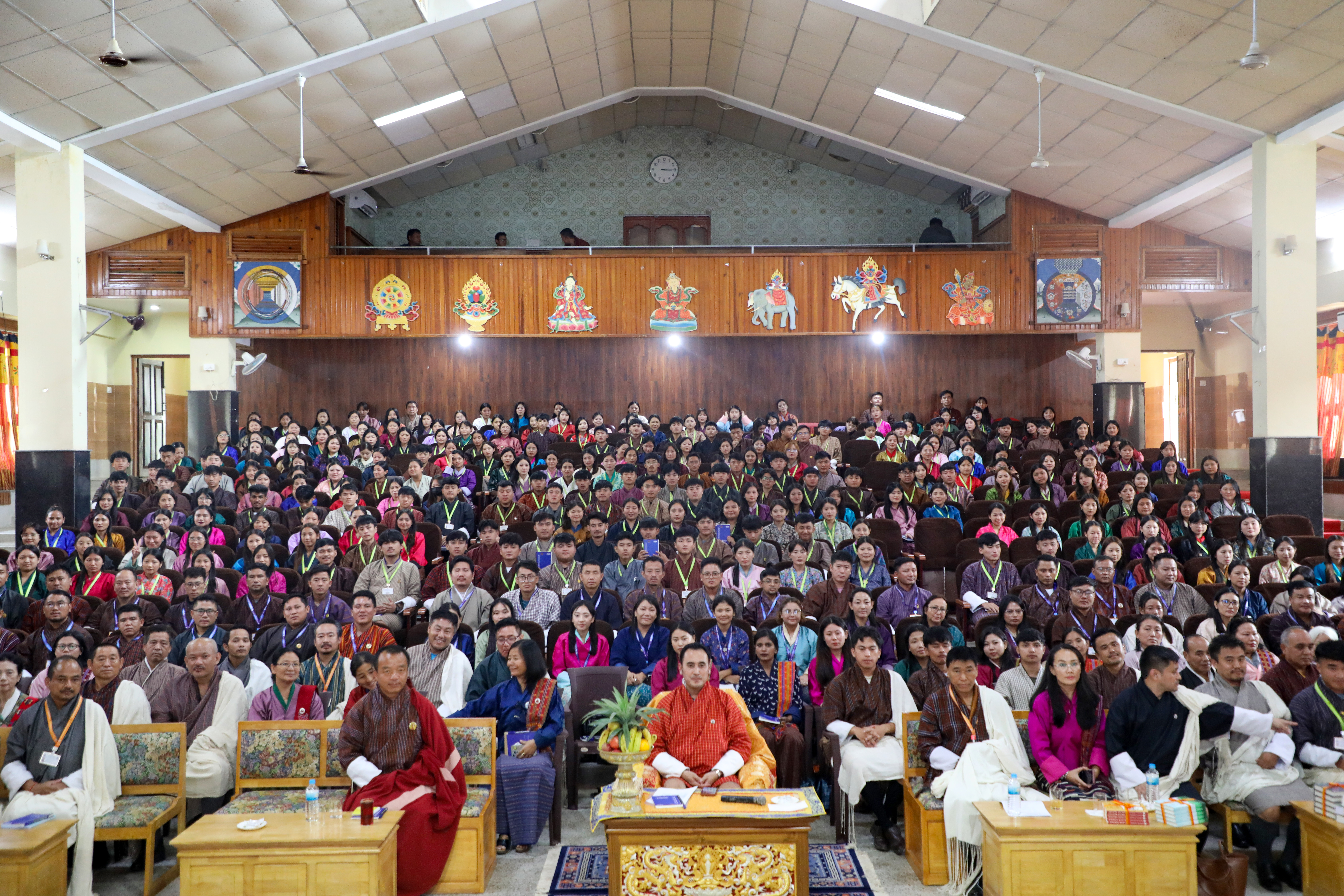
Samtse College of Education successfully conducted the 13th Faculty–Student Research Convention on 8 May 2026, bringing together faculty members, researchers, M.Ed and PgDE students to share research findings aimed at improving education, teaching practices, and social well-being in Bhutan.
Centred on the theme “Teacher Education Research in Bhutan: Trends, Challenges, Practices, and Perspectives,” the convention served as a platform for academic dialogue, knowledge sharing, and critical reflection on emerging issues in education.
The programme commenced with a welcome address by Dr. Kinley Seden, Dean of Research and Industrial Linkages, who highlighted the importance of research in enhancing teaching and learning through innovative pedagogies, differentiated instruction, and the integration of Artificial Intelligence (AI). She emphasised that research plays a vital role not only in education but also in advancing broader social and developmental goals.
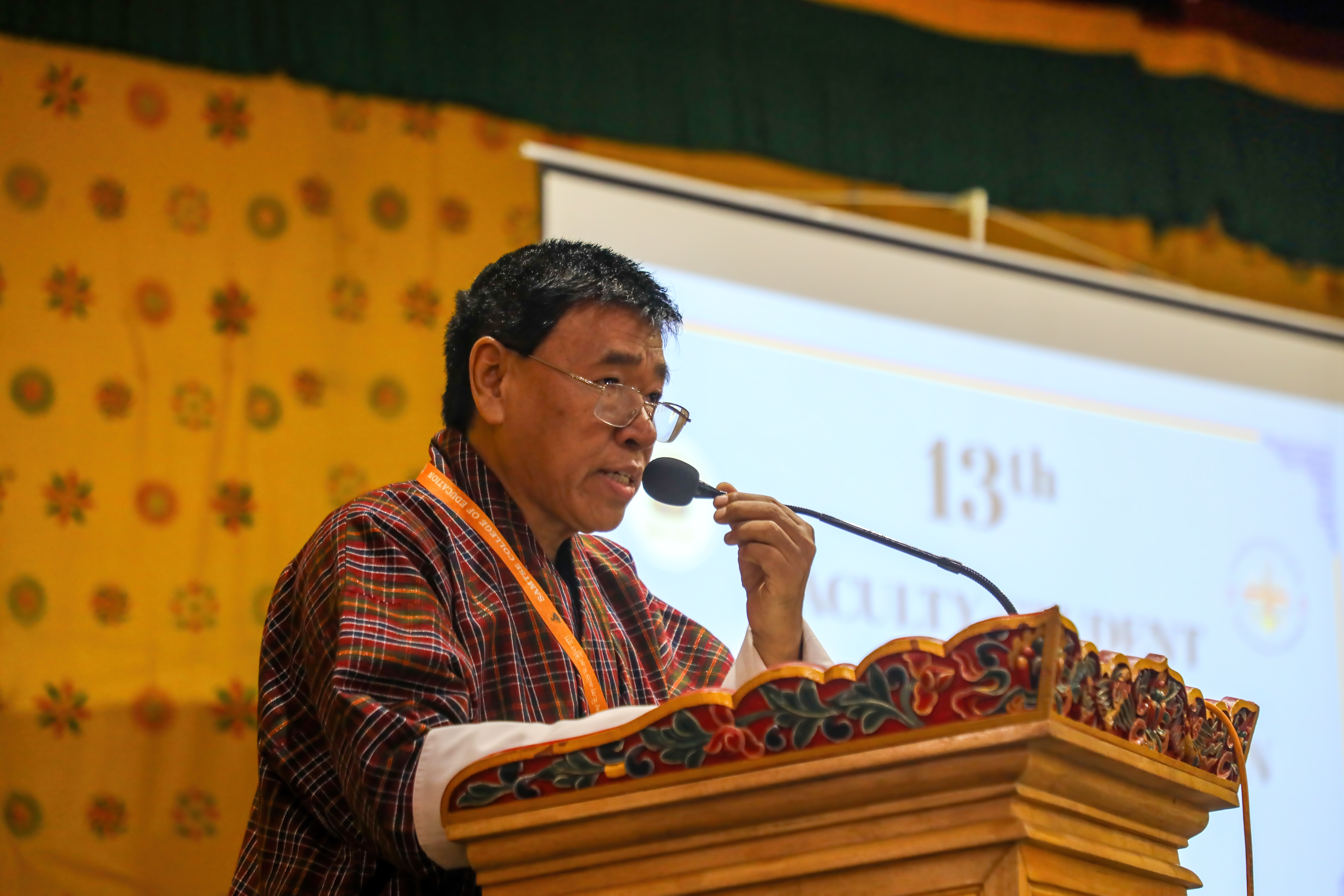
In his opening address, President Dr. Sonam Rinchen underscored the responsibility of Samtse College of Education, as one of Bhutan’s premier teacher education institutions, in transforming and strengthening the nation’s education system.
The keynote address, titled “Becoming a Researcher: Pathways of Curiosity, Rigour, and Shaping What Matters,” was delivered by Dr. Kathleen Gregory, Visiting Faculty at SCE and Honorary Fellow at RMIT University, Australia. Drawing from her experiences as a counsellor educator and researcher, she described research as both an intellectual and personal journey driven by curiosity, reflection, and meaningful inquiry.
The convention featured a series of research presentations organised into three sessions.
The first session, chaired by Dr. Kinley Seden, included presentations on scarcity and students’ economic choices, customer experiences in café services in Samtse, and the capability approach in promoting gender equality and social inclusion in Bhutanese schools.
The second session, chaired by Chenga Dorji, focused on pedagogical approaches and the use of Generative Artificial Intelligence (GenAI) in STEM education. One study explored how different pedagogical approaches influence students’ achievement in Mathematics, while another examined the opportunities and challenges associated with integrating GenAI tools into teaching, learning, and assessment.
The third session, chaired by Dr. Yangdon, addressed issues related to competency-based education, online advertising, and teacher attrition. Presenters discussed factors affecting students’ proficiency in responding to competency-based questions in English II and highlighted the need for stronger alignment between educational policy and classroom practice.
Another study explored the influence of online advertisements on students’ purchasing behaviour, while the final presentation examined the growing issue of teacher attrition in Bhutan and its impact on teachers’ professional, emotional, and social well-being.
The convention concluded with the awarding of certificates to presenters and participants, followed by a vote of thanks delivered by Sangay Lhamo, Research Officer.
The 13th Faculty–Student Research Convention provided an important platform for faculty members and students to exchange ideas, showcase scholarly work, and contribute to ongoing discussions on improving education and addressing emerging social challenges in Bhutan.

You may also like
Visit of the Hon’ble Minister of Industry, Commerce and Employment to SCE
SCE Hosts Joint International Research Conference 2026